
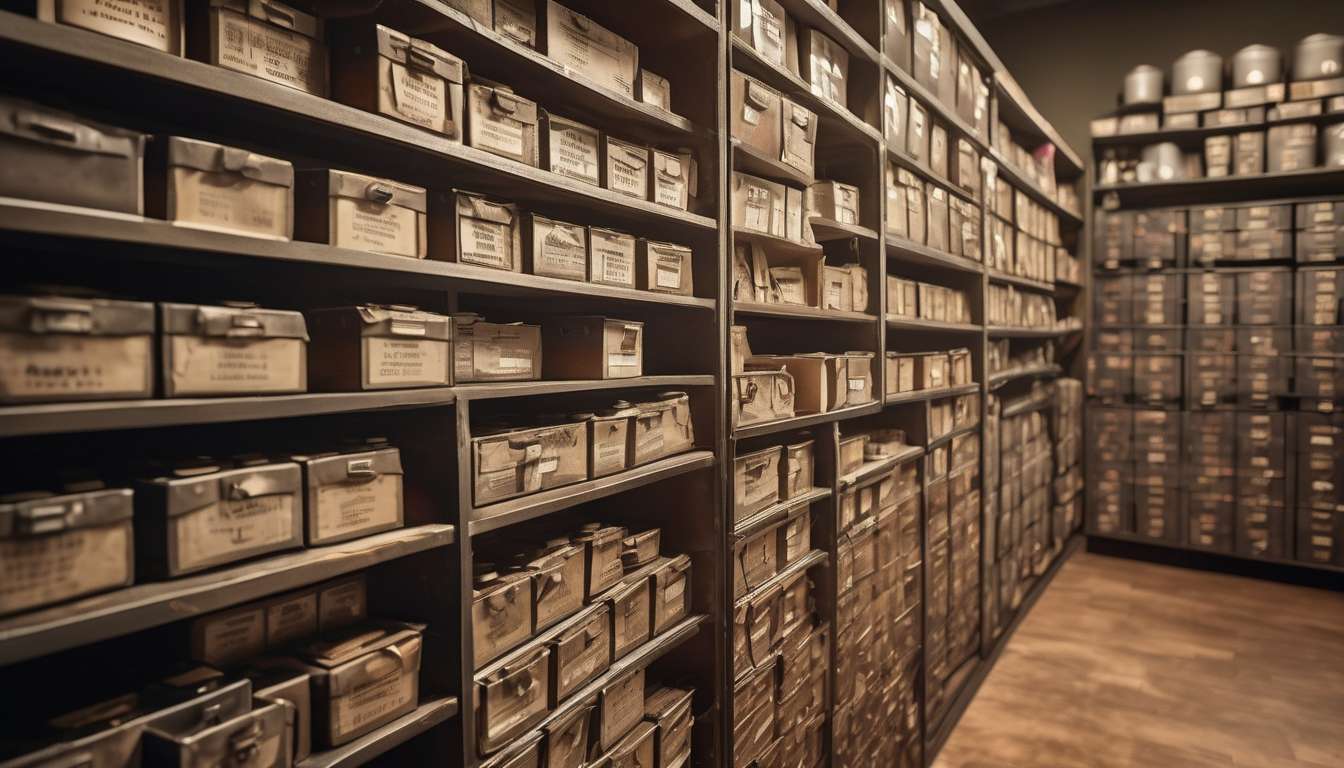
Preserving legacy through vault-like digital care may seem unrelated to artistic integrity, yet the connection becomes clear when planning long-term storage for adult photography catalogs.
Recognize archival value. These images carry financial, historical, and cultural importance that can erode without intentional preservation strategies.
Treat collections as archival assets. Safeguard provenance, metadata, and creators’ rights against format rot, platform deprecation, and shifting legal landscapes.
Implement technical safeguards:
- Redundant, geographically distributed backups to prevent loss from local failures or disasters.
- Robust encryption to protect privacy and control access.
- Integrity checks and versioning (e.g., checksums, journaled storage) to detect and recover from corruption.
Plan for future readability and migration.
- Use open, documented file formats when possible and keep migration plans so files remain usable decades hence.
- Maintain format and metadata documentation alongside the files.
Document rights and licensing clearly.
- Attach clear licensing and provenance metadata to preserve creators’ control and enable lawful monetization.
- Keep consent records and any model releases or contractual terms stored alongside the assets.
Balance privacy, monetization, and ethical stewardship.
- Access controls and auditing to ensure only authorized parties can retrieve sensitive assets.
- Policies for takedown, retraction, or restricted access in response to consent changes or legal requirements.
- Consider ethical obligations to respect the dignity and context of subjects, not just revenue streams.
By treating adult photography collections as archival assets with layered technical, legal, and ethical safeguards, you preserve revenue, protect creators’ rights, and maintain the cultural and historical context of the work over time.
Archival Value Assessment
We’ll evaluate each collection’s cultural, historical, and market significance to determine what merits long-term archival storage.
We’ll consider how digital preservation practices sustain community memory and ensure materials remain discoverable for future participants and scholars.
We’ll weigh artistic merit, representational diversity, and commercial impact to decide what we keep and why.
We’ll prioritize collections where consent management is robust, ensuring subjects’ rights and expectations are honored over time.
We’ll require documented permissions and review mechanisms so stored content reflects ongoing ethical commitments.
We’ll assess technical requirements:
- Format sustainability — prefer open, well-documented formats that reduce future migration risk.
- Redundancy — multiple geographically separated copies to protect against loss.
- Encryption and access controls — protect privacy while enabling authorized research and community use.
We’ll favor items that:
- Demonstrate clear value to our shared cultural narrative.
- Foster inclusion rather than exploitation.
- Have consent and permissions that support ethical retention.
By applying consistent criteria, we’ll build a trusted archive that:
- Respects contributors and their rights.
- Supports responsible use by researchers and community members.
- Ensures transparent, secure handling so the community can have confidence in preserved materials.
Provenance and Metadata
We will document each item’s origin, custody history, and descriptive metadata so future users can verify authenticity, understand context, and locate materials reliably.
- Creator credits
- Production dates
- Licensing terms
- Chain-of-custody events
We will capture creator credits, production dates, licensing terms, and any chain-of-custody events in standardized fields so everyone on our team — and future collaborators — feels included and confident using the collection.
- Use controlled vocabularies and consistent field names.
- Validate required fields at ingest.
- Provide guidance and examples for contributors.
We will embed technical and descriptive metadata to support digital preservation and ensure files remain intelligible across formats.
- Record file formats, codecs, checksums, and versioning.
- Include descriptive metadata (titles, abstracts, keywords, language).
- Store migration and format-change records.
We will record consent management details and retention conditions alongside rights statements, so access decisions honor contributors and community expectations.
- Capture consent scope, consent dates, and withdrawal options.
- Note retention schedules and archival disposition rules.
- Link consent records to rights statements in metadata.
We will apply clear access controls mapped to those statements, balancing discoverability with privacy and legal obligations.
- Map access levels to rights and consent metadata.
- Implement role-based access and audit logging.
- Provide redaction or restricted-view mechanisms where needed.
We will use persistent identifiers and checksums to tie records to files, and we will document provenance changes whenever we migrate or transform assets.
- Assign persistent identifiers (DOIs, ARKs, UUIDs).
- Record checksums for integrity verification.
- Log provenance events (migrations, derivatives, restorations).
By keeping metadata consistent, transparent, and accessible, we foster trust and belonging among stakeholders, making our catalog a reliable resource that reflects both ethical stewardship and practical usability.
- Maintain documentation and training materials.
- Provide public-facing metadata summaries where appropriate.
- Regularly audit metadata quality and compliance.
Redundant Backup Strategy
We will implement a geographically distributed, multi-tier backup strategy.
- Use independent media types (cloud object storage, off-site tape, encrypted on-prem archival systems) to avoid correlated media failures.
- Maintain versioned snapshots so every backup preserves change history and supports safe rollback.
- Run automated integrity checks (checksums, manifests) to detect corruption early.
We will keep multiple copies across cloud regions and on-prem archival storage.
- Store at least three geographically and media-diverse replicas so the catalog can survive regional outages or media failures.
- Ensure cross-region replication and periodic export to offline/on-prem archives for additional resilience.
We will schedule staggered snapshots to preserve change history and support digital preservation.
- Define snapshot cadence (e.g., hourly incremental, daily consolidated, weekly full) to balance recoverability and storage cost.
- Retain snapshots in a versioned catalog so rollbacks target specific points in time.
We will document retention policies and link backups to consent management.
- Maintain a clear retention policy per data class (e.g., public, restricted, contributor‑consent dependent).
- Tie backups to consent records so when contributors withdraw permission, affected copies can be located and handled according to policy.
We will automate integrity checks, reporting, and periodic restores.
- Automate health checks and reporting so the team always knows which replicas are healthy.
- Schedule periodic test restores (tabletop and full) to validate procedures and recovery time objectives.
- Log and alert on failures; generate auditable reports for compliance.
We will assign clear responsibilities and use role‑based workflows.
- Define roles and responsibilities for backup operations, monitoring, and recovery.
- Integrate workflows with existing access controls and role-based permissions so only authorized personnel can trigger restores or modify backup configurations.
By designing deliberately and inclusively, we protect both the catalog’s value and contributors’ rights.
- Communicate the backup and consent-handling approach to stakeholders.
- Periodically review policies and procedures to reflect legal, technical, or community changes.
Encryption and Access Control
We will enforce strong, layered encryption and strict role-based access so only authorized parties can read, modify, or export sensitive catalog content.
We will deploy end-to-end and at-rest encryption using vetted algorithms and manage keys with hardware security modules (HSMs), so our community can trust that digital preservation is more than storage—it’s custody.
We will define clear roles and minimize privileges, applying access controls that reflect real responsibilities and reduce accidental exposure.
We will integrate consent management tightly with authentication, so access logs tie back to documented permissions and contributor choices.
We will automate periodic reviews and entitlement management.
-
- Periodic entitlement reviews will be automated to detect role changes and stale access.
-
- Entitlements will be revoked or adjusted automatically when roles change.
We will maintain immutable audit trails for compliance and transparency.
We will require multi-factor authentication (MFA) and enforce session policies to prevent unauthorized exports.
We will train our team on secure handling and combine technical safeguards with respectful processes to protect creators and contributors while keeping the catalog usable for those who belong and are allowed to access it.
Format Migration Planning
Goal: Map current file formats, codecs, and metadata schemas and prioritize migrations based on risk, interoperability, and long-term accessibility.
Actions:
-
Inventory current formats
- Identify proprietary and deprecated file types.
- Flag formats that threaten readability or risk metadata loss.
-
Select target formats
- Choose formats that balance preservation fidelity with broad support.
- Document conversion settings and record validation checks to ensure integrity after migration.
Process and scheduling:
- Build migration schedules that respect resource limits and audience needs.
- Coordinate across teams so nobody feels sidelined; define roles and responsibilities.
Policy and governance:
- Integrate preservation with consent management to ensure transformed assets retain consent metadata and applicable retention rules.
- Enforce strict access controls during conversion workflows, limiting who can modify originals and derived files.
Testing, automation, and logging:
- Test migrations on representative samples.
- Automate recurring validation checks to detect degradation or metadata loss.
- Keep clear, auditable logs showing what changed, when, why, and by whom.
Outcome: By treating format migration as a collaborative, governed activity, you will sustain accessibility, maintain trust, and preserve the catalog’s long-term value.
Legal and Consent Records
We will maintain comprehensive, auditable legal and consent records that tie each image and derived file to explicit permissions, identity verification, retention periods, and any restrictions on use.
We document consent management steps, upload hashes, signed release forms, and ID checks so every team member feels confident and included in stewardship.
Our records will link to metadata used in digital preservation workflows, ensuring permissions persist through format migrations and storage refreshes.
We use role-based access controls and encrypted storage to limit who can view or modify consent data.
We store versioned policies so the community can see how permissions evolved.
We establish clear retention schedules aligned with consent terms and legal obligations, and we flag files when consent expires or restricts downstream use.
By keeping concise, standardized records and enforcing consent management with technical and organizational controls, we protect subjects, support collaborators, and sustain the catalog’s long-term value without ambiguity.
Audit Trails and Monitoring
We maintain detailed, tamper-evident audit trails and continuous monitoring so we can quickly detect, investigate, and prove any changes to images, metadata, or consent records.
We log every action — uploads, edits, downloads, permission changes — with timestamps, operator IDs, and cryptographic checksums to support digital preservation and forensic review.
We do not rely on hope; we instrument systems to emit clear, searchable records that our team and authorized partners can trust.
We integrate consent management events into the same trail so revocations or expirations are visible alongside content access.
We enforce strong access controls and role-based segregation to limit who can alter records, and we alert on anomalous patterns that suggest misuse.
We regularly review logs, run integrity scans, and retain immutable snapshots to prove provenance over time.
We welcome contributors and collaborators into this process so everyone feels safe knowing their images and permissions are handled transparently, securely, and with consistent accountability.
Ethical Stewardship Policies
We commit to clear, enforceable ethical stewardship policies that prioritize respect for subjects, informed consent, and ongoing accountability across the entire lifecycle of our adult photography catalogs.
We maintain a shared culture where every team member understands that digital preservation isn’t just technical — it’s custodial care that protects people and provenance.
We set concrete standards for consent management, recording consent scope, duration, and revocation options so contributors feel secure and included.
We apply rigorous access controls, granting the minimum permissions needed and logging every retrieval to build trust and traceability.
We review policies regularly with contributors and community representatives, welcoming feedback and adapting practices to evolving norms and laws.
We train staff in respectful handling, privacy-preserving redaction, and secure archival practices, so everyone belongs to a responsible stewardship community.
We audit compliance, publish summaries, and act swiftly on breaches or concerns.
By centering dignity, transparency, and shared responsibility, we preserve value while honoring the people whose work makes the catalog meaningful.
How do I determine the initial monetary valuation of a vintage adult photography collection for insurance purposes?
We’re asking how to value a vintage adult photography collection for insurance.
Document each item’s condition, provenance, edition, rarity and market comparables.
- Condition — note physical state (scratches, fading, tears, discoloration), whether prints are original or later reproductions, and any conservation history.
- Provenance — record ownership history, gallery or exhibition records, and any documentation that confirms authenticity.
- Edition — identify edition size, numbering, signatures, and publisher/photographer marks.
- Rarity — note unique prints, early prints, or images withdrawn from circulation.
- Market comparables — research similar works or the same photographer’s pieces that have sold recently to establish price context.
Get professional appraisals from specialists who handle photographic or vintage material.
- Seek appraisers experienced with photography, vintage prints, or adult photographic material if relevant in your jurisdiction.
- Use certified appraisers and request written, dated appraisals that state replacement value for insurance (not retail or resale estimates).
Research recent sale prices and auction results.
- Search auction house archives, dealer records, and online marketplaces for comparable sales.
- Include date, sale venue, hammer price, buyer’s premium, and any notable sale conditions to justify valuation.
Photograph items and keep receipts.
- Take high-resolution, well-lit photos of fronts, backs, signatures, edition marks, and any damage.
- Retain original purchase receipts, invoices, exhibition catalogs, and correspondence that support provenance and value.
Set replacement value, not sentimental value.
- Insurance companies require a realistic replacement cost — what it would cost to acquire a comparable item in today’s market.
- If items are truly one-of-a-kind and irreplaceable, insurers may use market value methods; discuss options with your insurer.
Update appraisals regularly to reflect market changes.
- Reappraise every 3–5 years or sooner if the market for the photographer or genre shifts significantly.
- Keep documentation of appraisals and updates to present to insurers when needed.
What are best practices for discreetly marketing or licensing content from the collection without exposing subjects or violating consent terms?
We’re asking how to discreetly market or license content while protecting subjects and consent.
We’ll audit all releases, redact identifying details, and use model‑released or anonymized imagery only.
We’ll set strict distribution tiers, watermark previews, and require NDAs and approved usage terms.
We’ll vet partners, use private marketplaces or invite‑only portals, and keep transparent records so everyone feels respected and safe throughout licensing conversations.
How can I safely incorporate physical prints or negatives into a long-term digital archive while minimizing damage during digitization?
Goal: safely add physical prints and negatives into a long-term digital archive while minimizing damage during digitization.
Preparation and handling
- Wear clean, lint-free gloves to avoid fingerprints, oils, and particulates contacting emulsion or paper surfaces.
- Work on flat, padded surfaces (e.g., antistatic mats, foam pads) to support items and prevent bending.
- Avoid pressure, flexing, or sharp edges — do not stack heavy objects on top of prints/negatives and handle each item by its edges.
Cleaning before digitization
- Remove loose dust and debris with soft tools:
- Use a soft, natural-hair or antistatic brush to sweep away particles from prints and negatives.
- For film, consider a manual air blower (bulb blower) — avoid canned air.
- Do not use liquids or solvents unless performed by a trained conservator.
Digitization methods and settings
- Use gentle, appropriate scanning equipment:
- For prints: a flatbed scanner with a clean glass platen and a padded support, or a copy stand with a gentle platen.
- For fragile or bound material: a cradle scanner that supports the object without flattening.
- For film negatives/slides: dedicated film holders on a flatbed or a film/film-scanning device that prevents bending and keeps emulsion flat without pressure.
- Scan at archival resolutions and formats:
- Select resolution appropriate for long-term preservation (commonly 3000–4000 ppi for prints, 4000 ppi or higher for small-format negatives; adjust by size/condition).
- Save master files in uncompressed or lossless formats (e.g., TIFF) and keep working/derivative files in suitable formats (e.g., JPEG, PNG).
- Minimize contact during placement:
- Use tongs, archival paper slips, or edge handling to place items into holders.
- Avoid pressing glass down onto fragile surfaces.
Post-digitization care and storage
- Return originals to archival housings:
- Place prints and negatives into acid-free, lignin-free sleeves or envelopes.
- Use sleeves with inert plastics (e.g., polyester/Mylar, polypropylene, polyethylene) if appropriate for the material.
- Store in climate-controlled boxes:
- Use archival-quality boxes and maintain stable temperature and relative humidity (commonly ~18–20°C / 64–68°F and 30–50% RH; consult a conservator for material-specific ranges).
- Keep boxes away from light, pollutants, and fluctuating environmental conditions.
- Label and document provenance:
- Attach identification metadata to both digital masters and physical items (without writing directly on originals).
- Keep a chain-of-custody and condition report for each item.
When to consult a conservator
- If items are fragile, sticky, moldy, cracked, severely faded, or otherwise compromised, stop and consult a trained photograph conservator before continuing.
Summary
- Handle with gloves on flat, padded surfaces and avoid pressure or bending.
- Clean gently with brushes/blowers only.
- Use cradle scanners, gentle film holders, and archival scanning resolutions/formats.
- Return originals to acid-free sleeves and climate-controlled boxes, and document thoroughly.
- Consult a conservator for damaged or unstable materials.
Conclusion
Protect long-term value by combining archival assessment, detailed provenance and metadata, and redundant backups.
Conduct archival assessment to determine material types, condition, and preservation needs.
Create detailed provenance and metadata for each item:
- Catalog creator, date, and rights/licensing.
- Capture context, subjects, locations, and consent status.
- Record technical details (file format, resolution, color profile).
- Link related assets and derivative works.
Implement redundant, encrypted storage and strong access controls.
- Maintain multiple geographically separated copies (at least 3-2-1 principle: 3 copies, 2 media, 1 offsite).
- Encrypt data at rest and in transit.
- Enforce least-privilege access, multi-factor authentication, and role-based permissions.
- Keep a secure, versioned key management practice.
Plan and perform format migration to avoid obsolescence.
- Monitor format risk and vendor lifecycle.
- Migrate to open, well-documented formats when appropriate.
- Validate integrity after migration and keep original masters when feasible.
Keep clear legal and consent records and maintain audit trails.
- Store signed model releases, licensing agreements, and provenance documentation.
- Record date-stamped access, edits, and transfers to create an immutable audit history.
- Retain records long enough to satisfy legal and contractual obligations.
Continuously monitor systems and maintain operational readiness.
- Use integrity checks (checksums), regular integrity scans, and automated alerts.
- Test backups and recovery procedures on a scheduled basis.
- Update security patches and storage health monitoring.
Apply ethical stewardship policies that respect subjects’ rights and privacy.
- Restrict usage according to consent and applicable law.
- Implement takedown and redress processes for subjects.
- Consider anonymization, redaction, or controlled-access workflows where necessary.
Together, these practices preserve both the commercial worth and moral integrity of the collection.